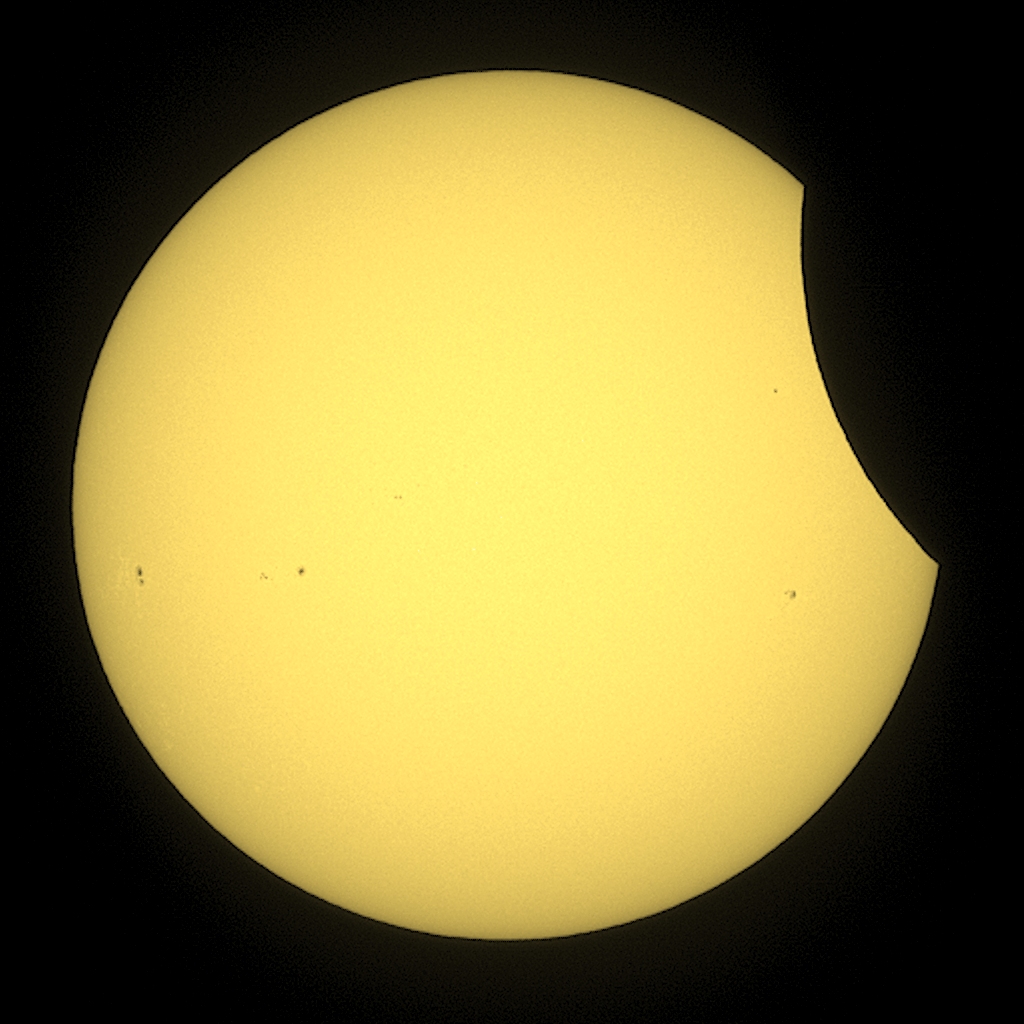
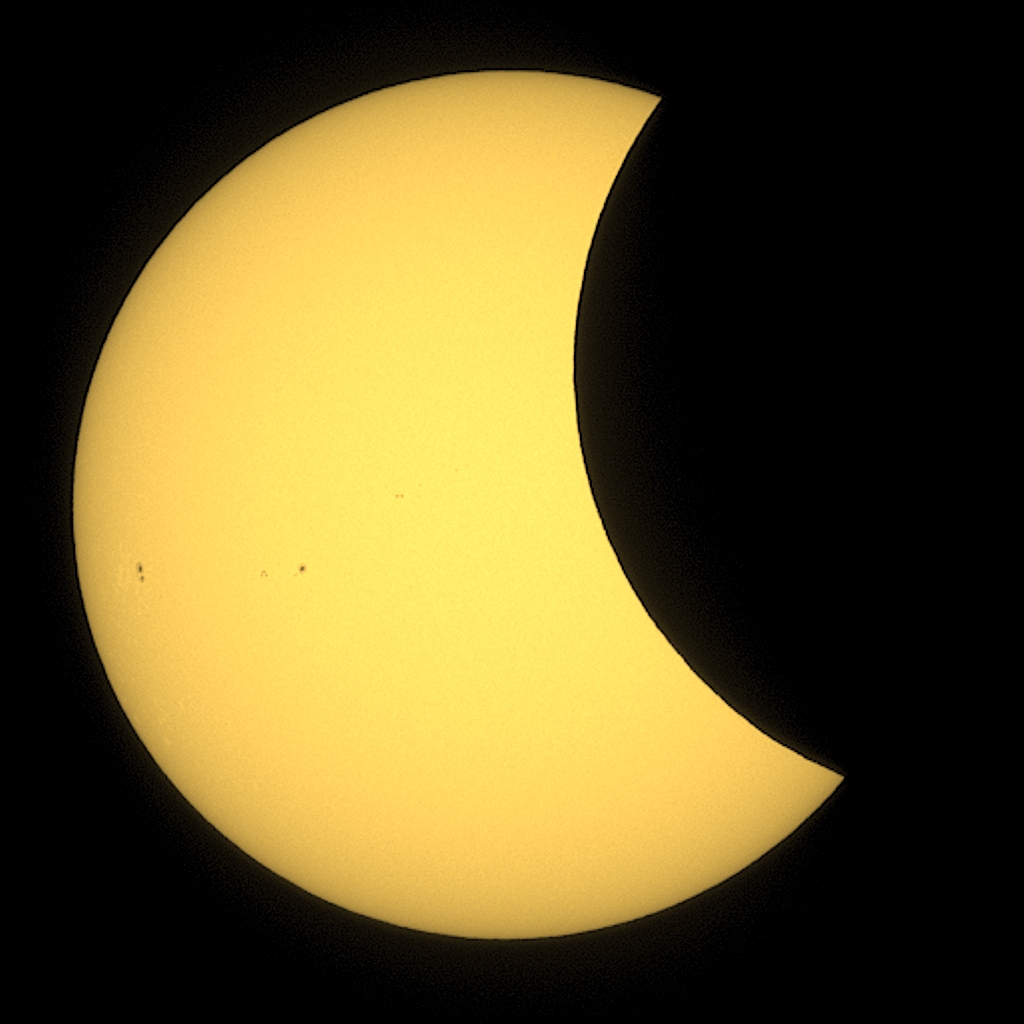
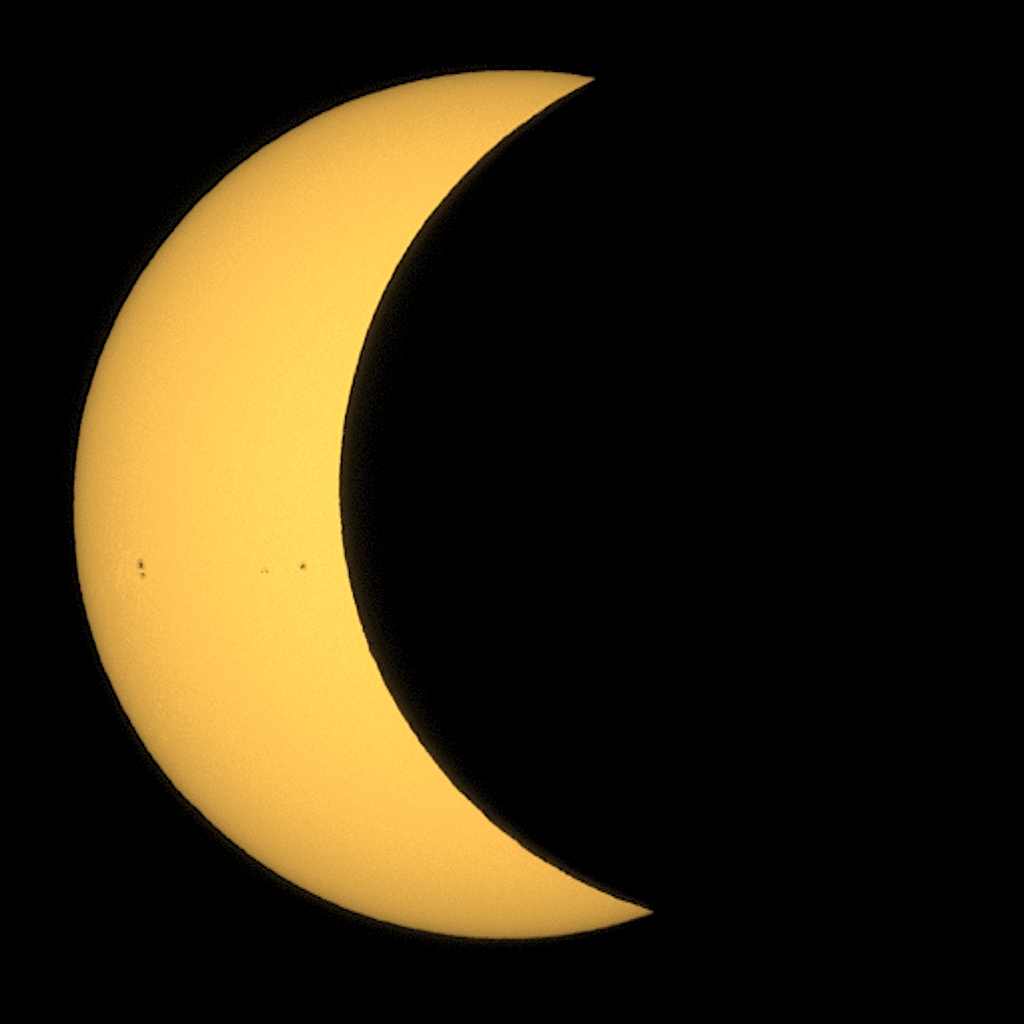
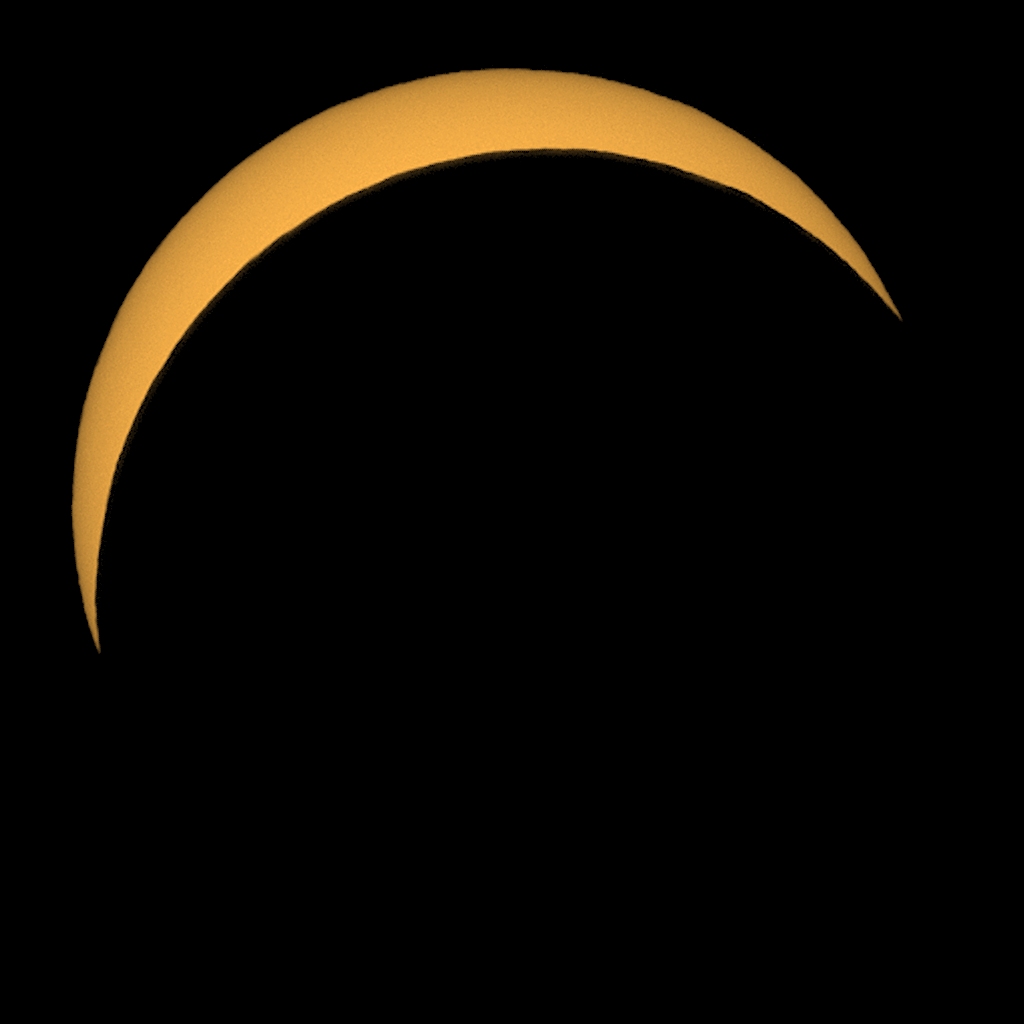
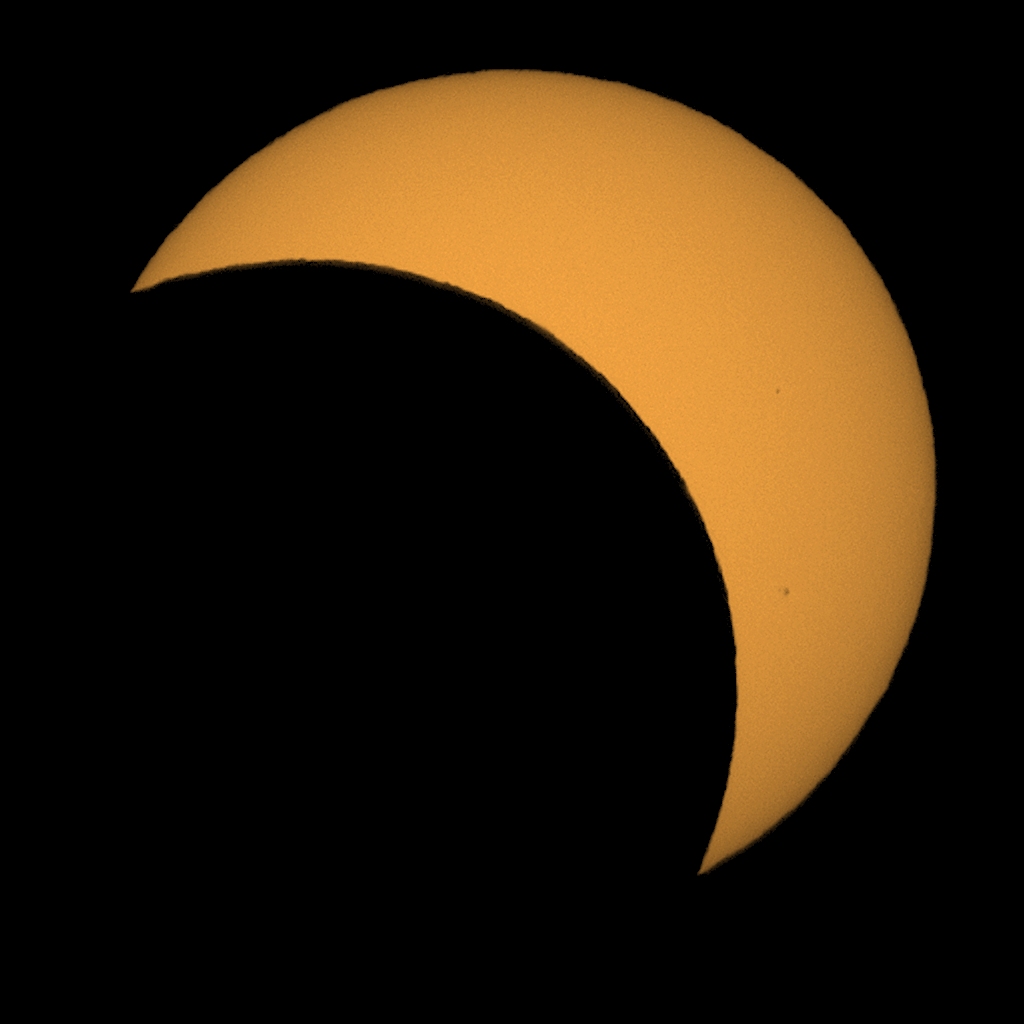
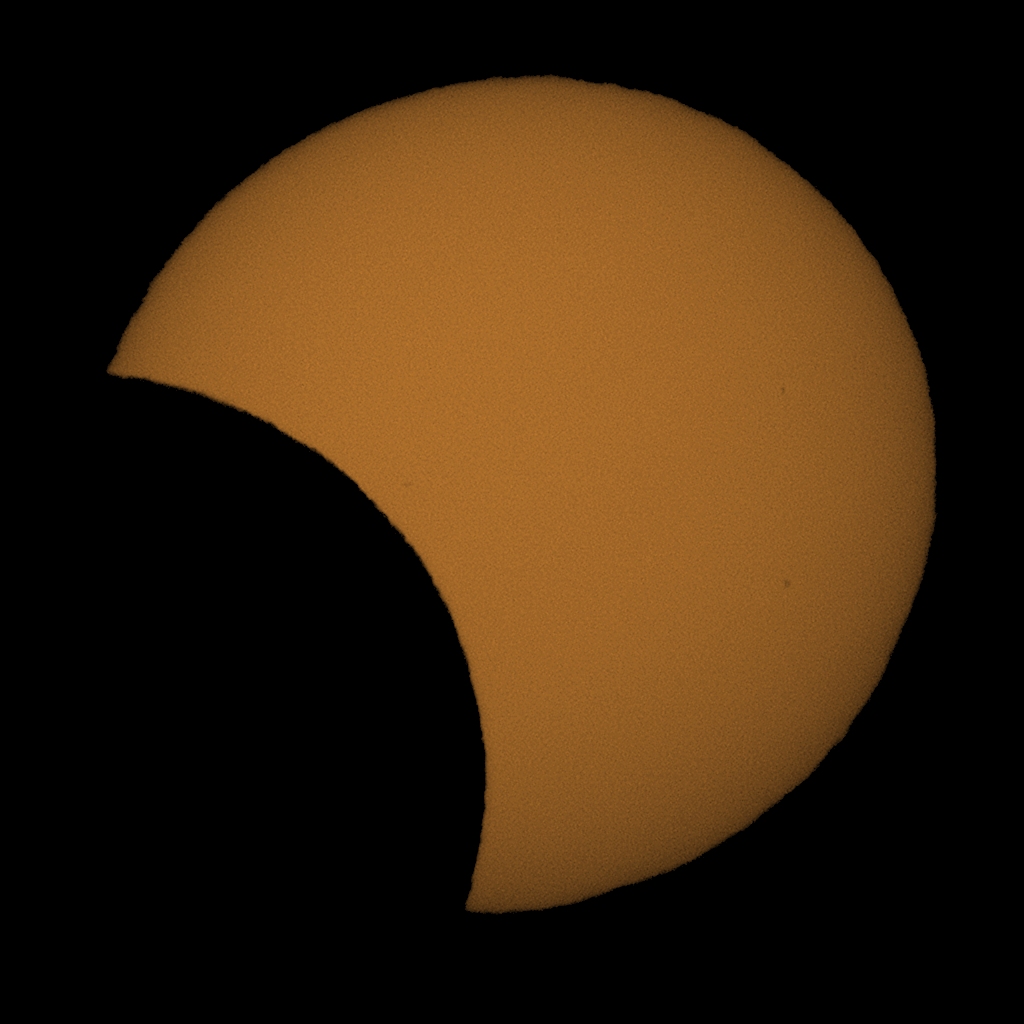
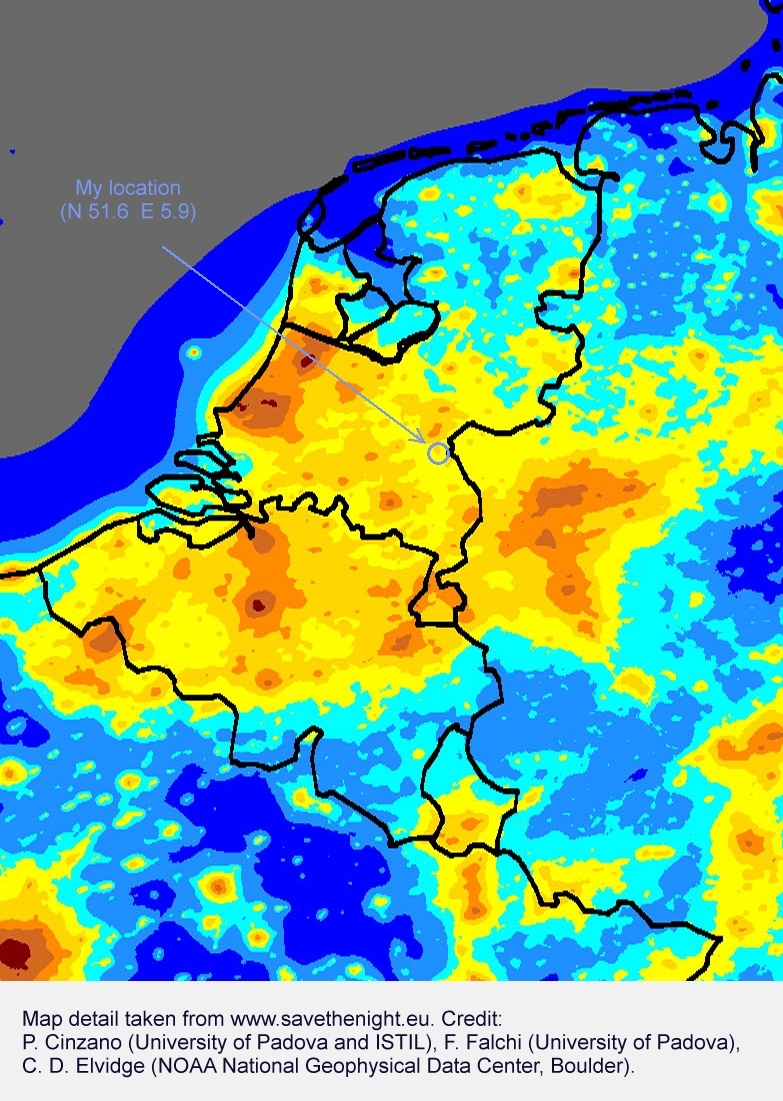
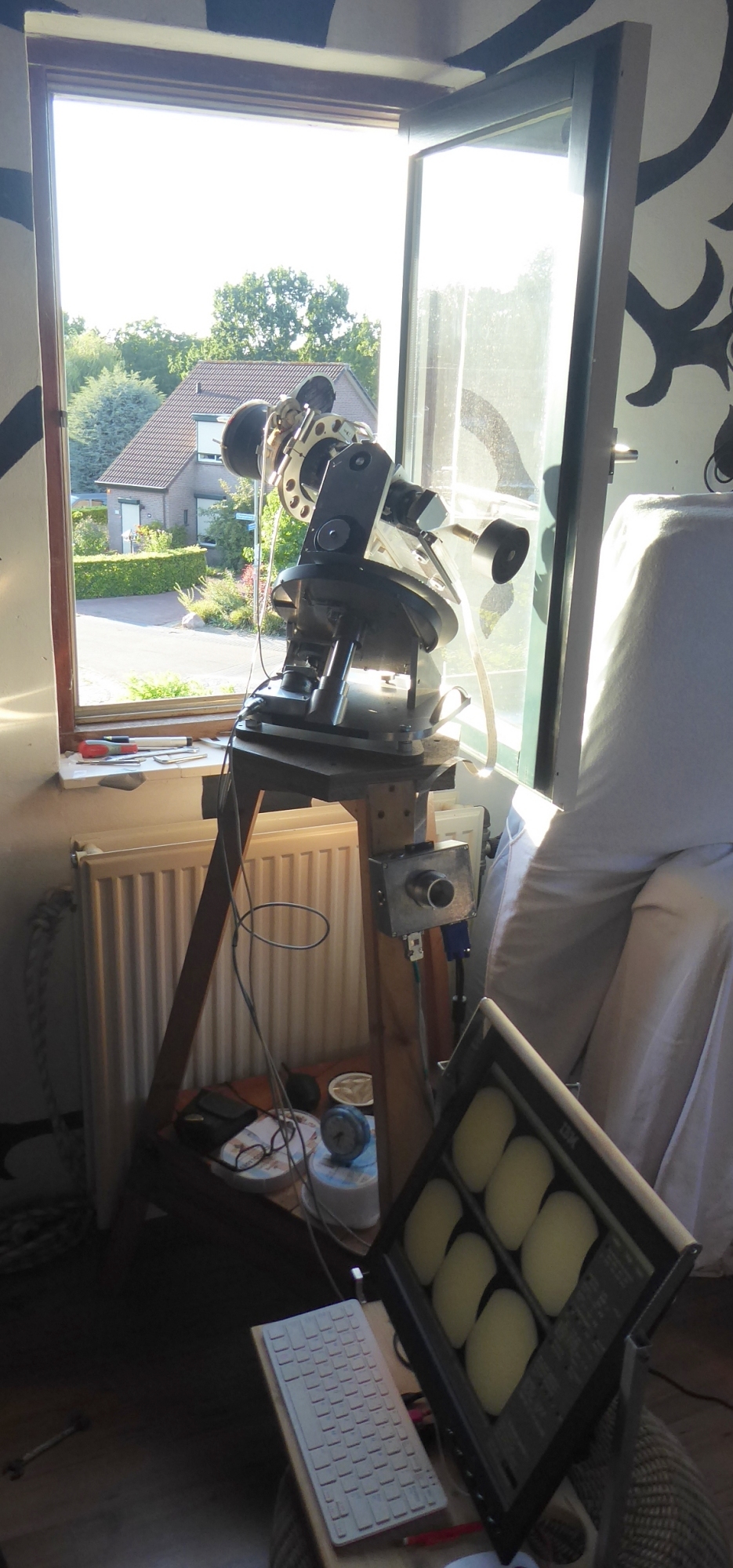
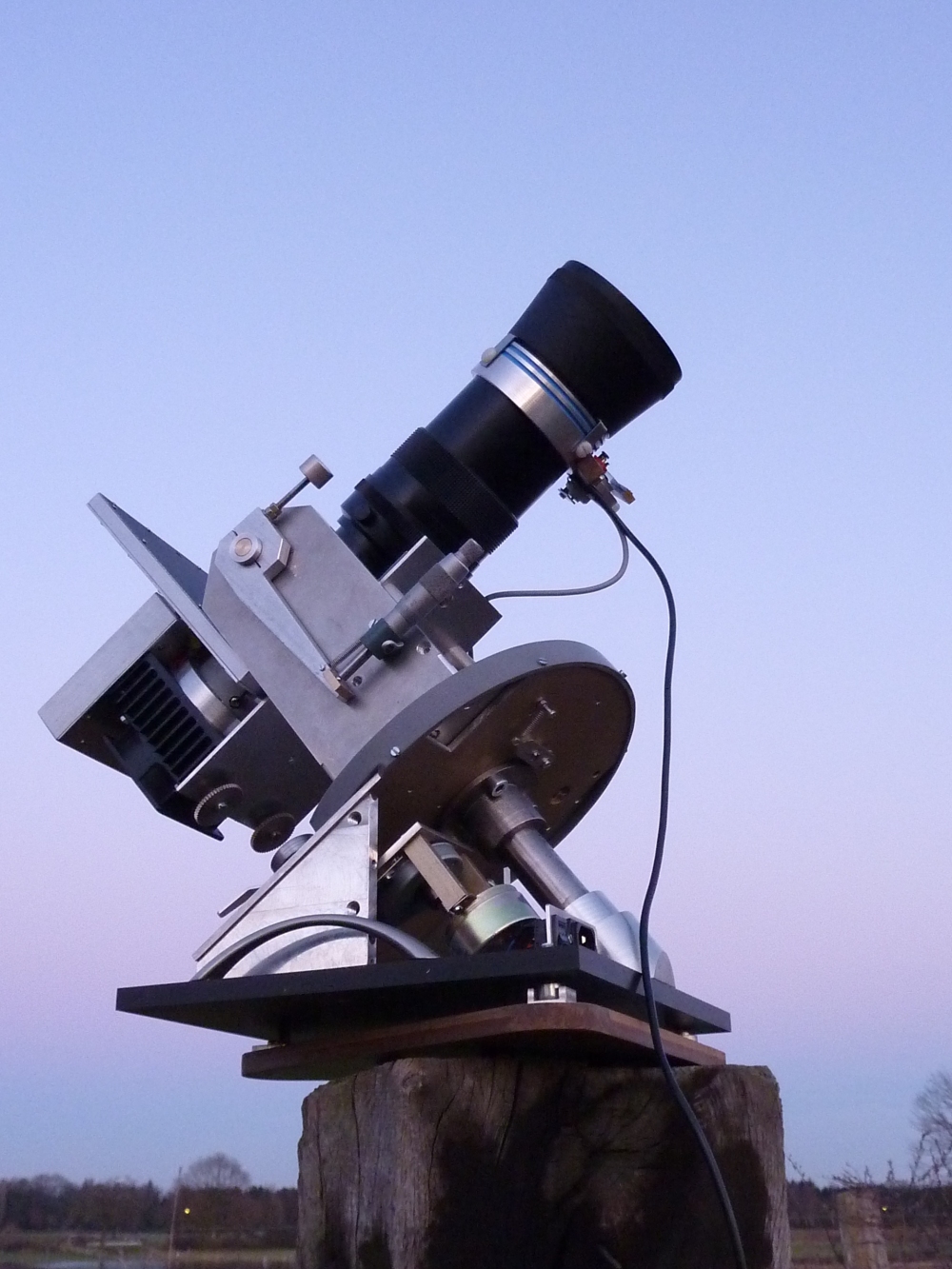
From my location at 51.6 degrees north and 5.9 degrees east, the partial solar eclipse of 12 august 2026 took place low in the West. Maximum occultation (88%) occurred at a height of approximately 8 degrees above the horizon. To photograph the main part of the sequence an improvised setup in the attic was used, viewing WNW through a top-window. It allowed for photographing the major part of the eclipse until some 34 minutes after the maximum when it was obscured by a row of distant trees. The setup comprised a small fork-mount, an f=300mm telephotolens at f/D=8 and Raspberry Pi HQ-camera, resulting in a 1.2x0.9 degrees field of view. The camera's standard Hoya filter is replaced by a Baader Planetarium L-filter and the telephotolens was covered with a Baader Planetarium AstroSolar Film with OD=3.8. A total of nearly 100 Images were acquired, one every minute, with a 0.6 msec exposure time. G and B channels were added (the R-channel was omitted, being slightly out-of-focus with this (East-German made) Leica objective). Processing comprised of aligning the individual images, sharpening them with a Laplace kernel, artificially colouring and adapting grey-level setting for partly compensating the dwindling intensitiy (a factor ~10) and changing colour of the setting sun. |
 |
 |
|
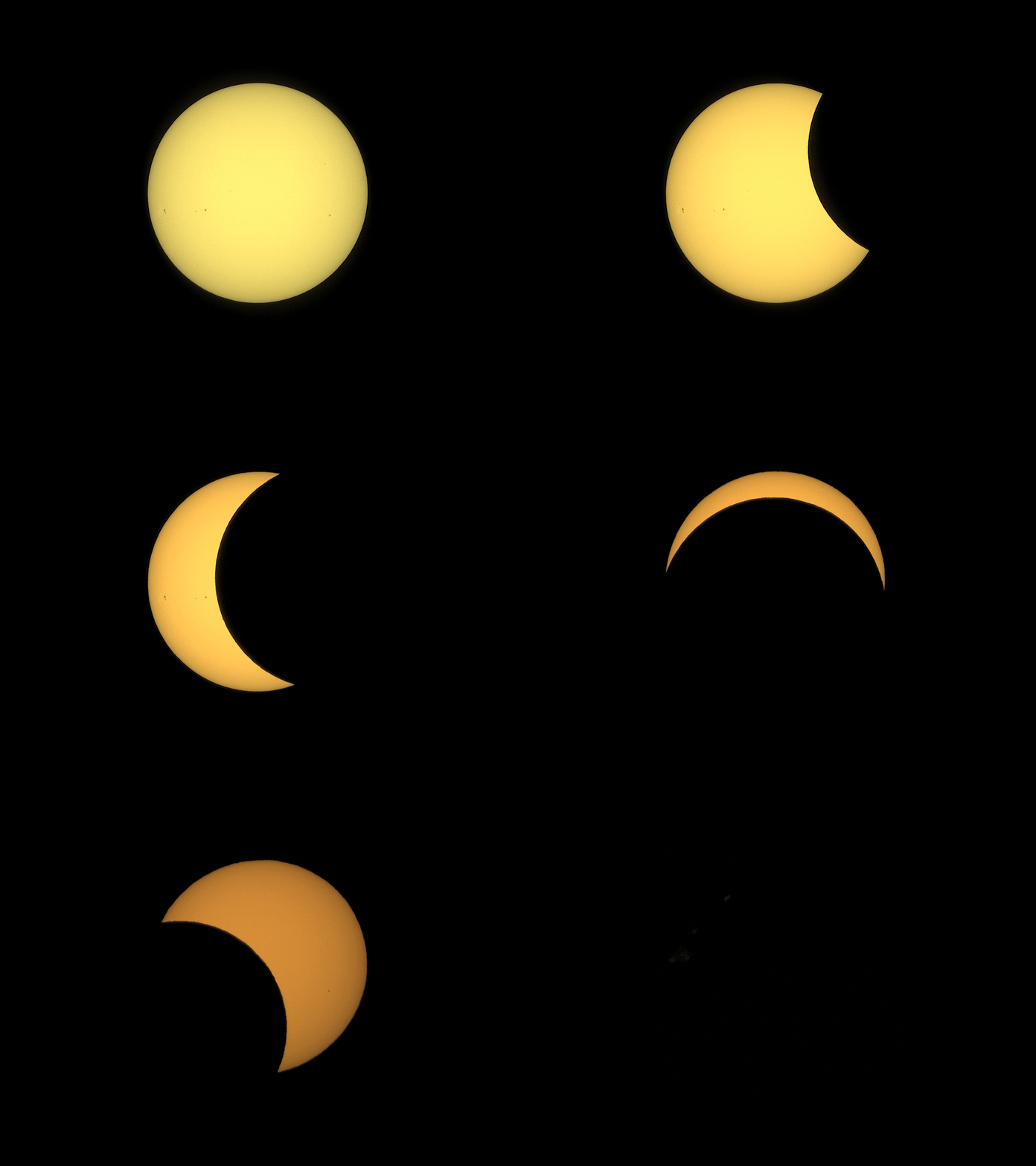
94 images, from 19u16 till 20u55 CEST assembled into a GIF movie Celestial north is up. (Click on de the GIF for a full size version) Some separate frames: 19u24m, 19u40m, 19u56m, 20u12m, 20u28m, 20u45m. |
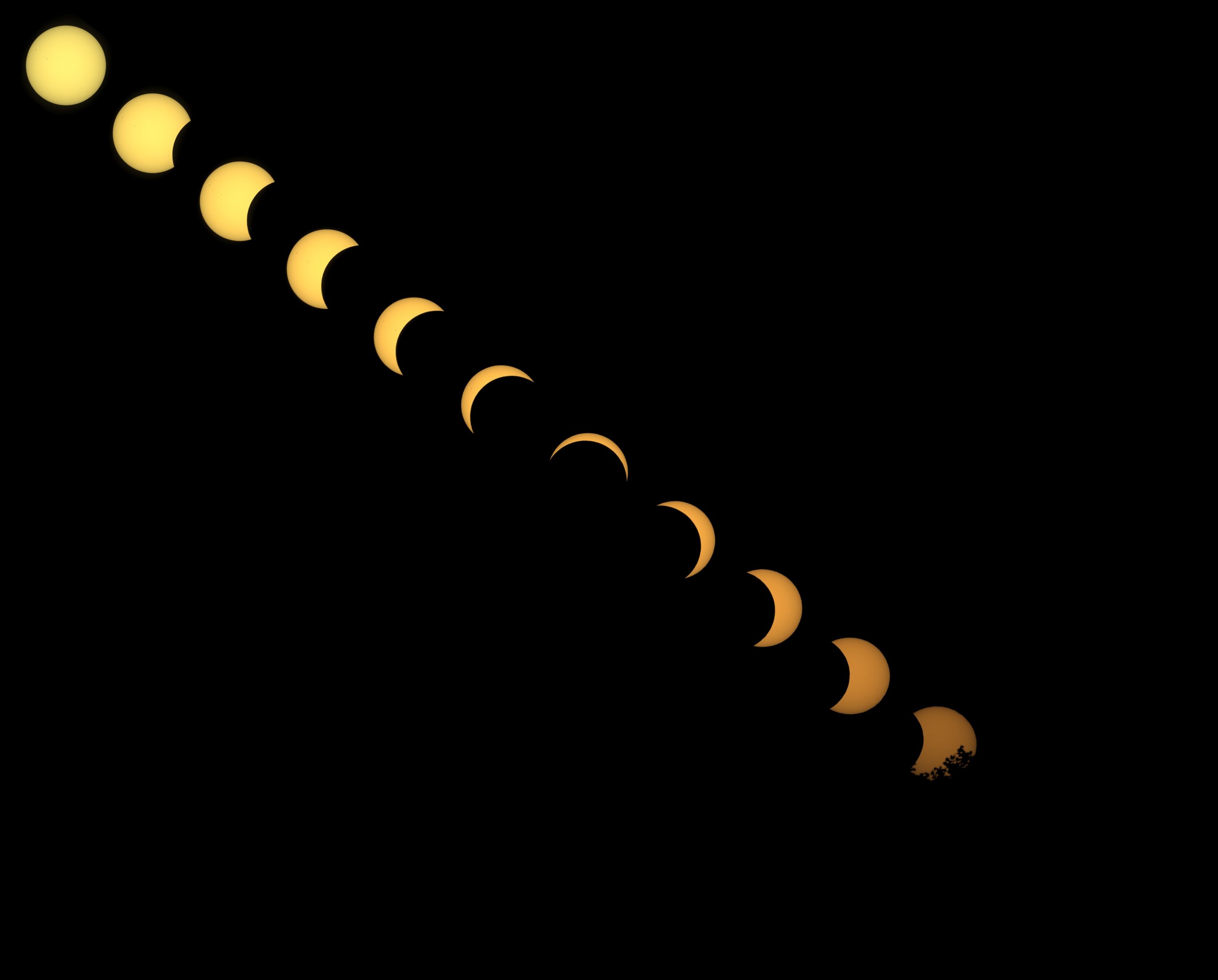
A selection of frames separated by approximately 8 minutes assembled in a collage mimicking the observers view from my location, where the angle of the ecliptic is ~38 degrees. (In reality frames separated by 8 minutes would be 2 degr. apart, i.e. 4 Sun diameters. In this collage they are separated by 0.7 degr.) (Click on de the image for a larger version) |